Menu ☰
Breast Aesthetics4 procedures
Aesthetic Surgery8 procedures
Reconstructive4 procedures
Minimally Invasive6 treatments
Aesthetic Surgery
Liposuction
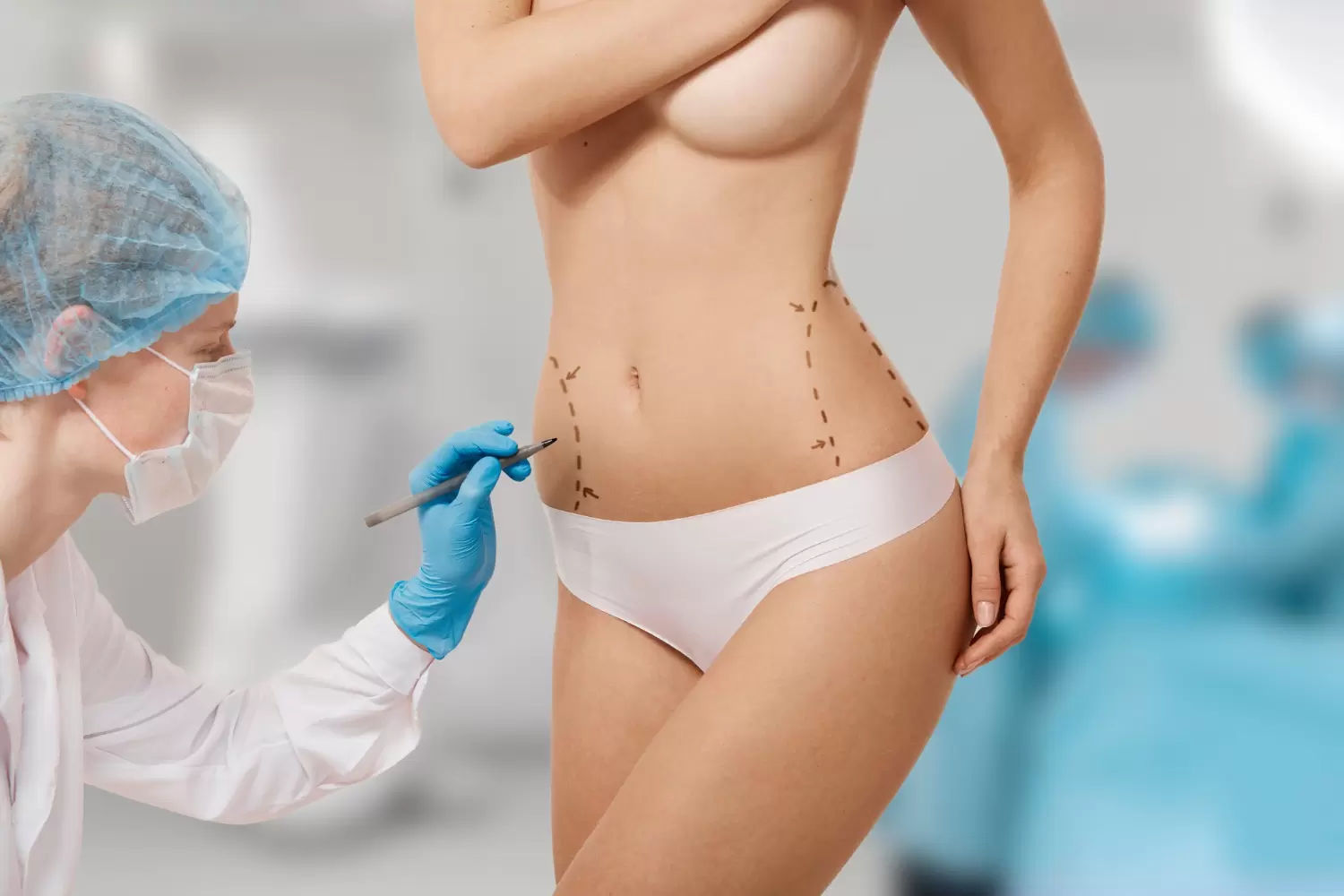
Liposuction is a surgical body-contouring technique that sculpts the figure by removing fatty tissue, through suction, from areas where it has accumulated in excess.
What you should know
Liposuction
Consultation
Every plan is tailored to you. Discuss your options with our surgeons.
Call 216 002 3854 ↗Liposuction is a surgical body-contouring technique in which excess fatty tissue is removed by suction from areas where it accumulates in abundance and does not respond to diet and exercise.
This improves symmetry and proportion, first in the treated areas and, by extension, across the whole body, creating a smoother, more harmonious silhouette.
Are the results of liposuction permanent?
In adults, fat cells do not increase in number; instead, they grow or shrink in size depending on dietary habits. Increased food intake therefore leads to larger fat cells and, in turn, to higher body weight.
With liposuction the results are permanent, because the fat cells are removed for good from the treated areas. As a result, there are no longer enough fat cells in these areas to “refill” them, as would happen, for example, if an unbalanced diet followed a period of dieting. This does not mean that weight gain has no effect on the result, which is why maintaining a stable weight remains important.
It should be emphasised that liposuction is not a weight-loss method but a body-contouring procedure, as there are limits to the amount of fatty tissue that can be safely removed in a single operation.
Which areas can be treated with liposuction?
The most commonly treated areas are:
- Abdomen and flanks (“love handles”)
- Buttocks, above the iliac crest and around the greater trochanter
- Thighs, outer and inner surfaces, as well as the knees
- The area beneath the jaw (“double chin”)
- Upper arms and back
- The male chest, in cases of pseudogynecomastia
In practice, liposuction can be performed on any area of the body with excess fatty tissue, provided there is an appropriate indication. It is often combined with other procedures, such as abdominoplasty or fat transfer.
How is liposuction performed?
Liposuction uses special fine cannulas connected to a suction device. The cannulas are inserted through very small incisions (just a few millimetres), after the area has first been infiltrated with a special solution that reduces pain and bleeding (the tumescent technique).
The procedure can be performed under general anaesthesia or under a combination of sedation and local anaesthesia, depending on the extent of the area. In recent years, assisted liposuction techniques have been developed:
- PAL (Power Assisted Liposuction): the surgeon uses a special device with cannulas that produce mechanical vibrations, making fat removal easier and reducing trauma to the tissues.
- VASER: ultrasound energy is used to liquefy the fat before suction, allowing more detailed sculpting in selected cases.
The choice of technique depends on the patient’s anatomy, the area being treated and the experience of the surgeon, who will make the final decision with the aim of achieving the best possible result.
Who is a suitable candidate?
Ideal candidates for liposuction are men and women who:
- Have a relatively stable weight, close to their ideal.
- Have localised fat deposits that do not respond to diet and exercise.
- Have good skin elasticity, so that the skin can retract smoothly once the fat has been removed.
- Are in good general health and have realistic expectations.
Where there is significant skin laxity, for example after major weight loss or pregnancy, liposuction may need to be combined with a skin-removal procedure such as abdominoplasty, a thigh lift or an arm lift.
Preparing for surgery
- Clinical examination and planning of the areas to be treated, including an assessment of skin quality.
- Blood tests and, where necessary, a cardiological check-up.
- Stopping medicines and supplements that affect blood clotting (aspirin, non-steroidal anti-inflammatories, vitamin E, fish oils) at least 7–10 days beforehand.
- Avoiding smoking for 4–6 weeks before and after surgery, as it impairs healing.
- Abstaining from alcohol for at least 48 hours beforehand.
- Fasting from food and fluids in line with the anaesthetist’s instructions.
- Obtaining the special compression garment to be worn after surgery.
Recovery & aftercare
- Compression garment: usually worn for 4–6 weeks, it helps reduce swelling and allows the skin to settle smoothly.
- Swelling and bruising: these are normal in the first few weeks and subside gradually.
- Return to activities: light daily activities after 2–3 days; office work usually after one week.
- Exercise: strenuous exercise is gradually resumed after 4 weeks.
- Lymphatic drainage massage: recommended in some cases to help swelling subside more quickly.
The final result becomes visible progressively as the swelling subsides, and settles within approximately 3–6 months.
Frequently asked questions
How much fat can be removed?
The amount depends on your general health and the areas being treated. For safety reasons there are limits per procedure, which are determined individually during your consultation.
Will there be scars?
The incisions are only a few millimetres long and are placed in discreet locations, so over time they become almost invisible.
Is it very painful?
In the first few days there is a feeling of tenderness, similar to intense muscle fatigue, which is well controlled with simple painkillers.
Does it help with cellulite?
Liposuction is not a treatment for cellulite. There are dedicated treatments for cellulite, which we would be happy to discuss during your visit.
The first step is an
honest conversation.
Chrysostomou Smyrnis 48-60, Vyronas 16232, Athens · By appointment only
Call 216 002 3854 ↗