Menu ☰
Breast Aesthetics4 procedures
Aesthetic Surgery8 procedures
Reconstructive4 procedures
Minimally Invasive6 treatments
Reconstructive
Breast Reconstruction
A woman's breast is an invaluable part of her femininity.
What you should know
Breast Reconstruction
Consultation
Every treatment plan is tailored to you. Discuss your options with our surgeons.
Call 216 002 3854 ↗A woman's breast is an invaluable part of her femininity. In Western culture, the female breast is a pre-eminent symbol of motherhood, femininity and sexuality. Sadly, however, the breast – like the human body as a whole – is not immune to disease, including breast cancer.
Surgical treatment of the disease may range from a lumpectomy to a mastectomy. When required, mastectomy is the primary goal of treatment and can prove life-saving for the patient.
Necessary as it is, however, it would be wrong to overlook the fact that it is also a “mutilating” procedure that can have a profound effect on a patient's emotional well-being and quality of life.
This is precisely the challenge that reconstructive plastic surgery of the breast addresses: using a range of reconstruction techniques, it can achieve results ranging from satisfactory to excellent, both reconstructively and aesthetically.
Breast reconstruction after mastectomy is an integral part of comprehensive care for patients with breast cancer, improving quality of life and addressing the disease on both a physical and an emotional level. Close collaboration between the breast surgeon, the oncologist and the plastic surgeon at every stage of the process is essential to achieve the best oncological and aesthetic outcomes for the patient.
The classic method of breast reconstruction after mastectomy
In general, the classic method of breast reconstruction after mastectomy involves three stages.
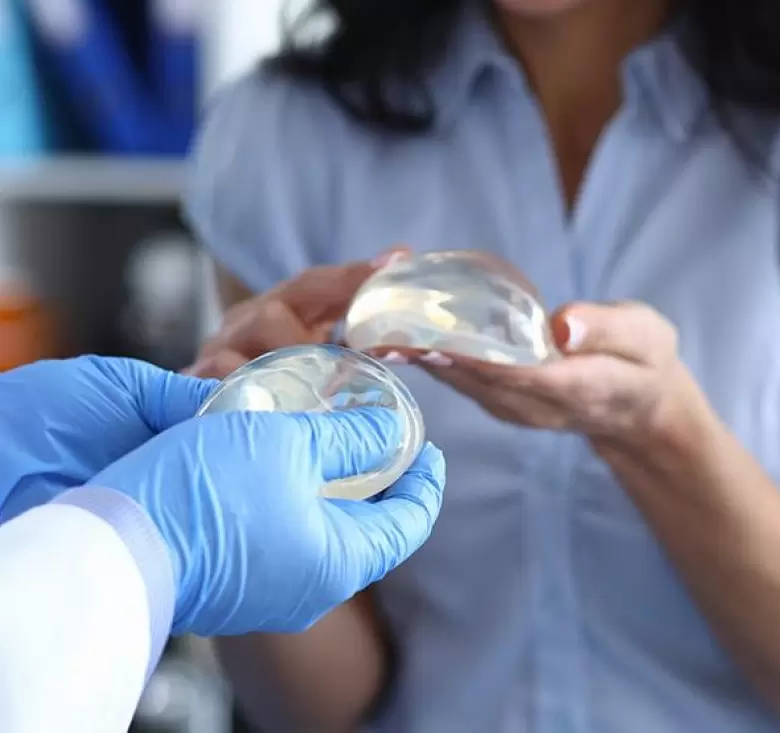
The first stage is the placement of a tissue expander, usually beneath the muscle of the anterior chest wall on which the breast naturally rests. Through a valve, the expander is gradually filled with saline at regular intervals – a procedure that can be carried out in the clinic – until it reaches a satisfactory volume and shape.
The second stage is the replacement of the tissue expander with a specially designed silicone implant.
The third stage is the surgical reconstruction of the nipple and areola, which in recent years has increasingly been replaced by non-surgical techniques such as three-dimensional tattooing, with outstanding aesthetic results.
In selected cases, other reconstruction techniques are used, most of which involve the patient's own (autologous) tissue, such as the latissimus dorsi or rectus abdominis muscle, as well as the placement of special permanent Becker-type expanders.
The single-stage technique
In recent years, the single-stage technique has also been adopted, in which the procedure is completed in a single operation, combining mastectomy and reconstruction – provided, of course, that the necessary oncological criteria are met. This technique is an emerging international trend and can deliver an excellent aesthetic result. The patient leaves the operating theatre free of disease and with a breast that is aesthetically no different from the breast she had before her illness. In fact, the symmetrising techniques performed during the same operation often produce a breast that is aesthetically even better than before – with all the positive effects this has on the patient's emotional well-being. It is an ideal method for patients undergoing prophylactic mastectomy.
Reconstruction with the patient's own tissue & other options
In selected cases, the breast is reconstructed using the patient's own (autologous) tissue, usually when radiotherapy has been given or when the skin of the chest does not allow the use of an implant alone:
- Latissimus dorsi myocutaneous flap: skin and muscle are transferred from the back to the chest, often in combination with an implant.
- Abdominal flaps (rectus abdominis): skin and fat from the abdomen are used to create a natural breast without an implant.
- Permanent Becker-type expanders: double-lumen implants that act as both an expander and a permanent implant, reducing the number of operations required.
- Fat transfer: often used as a complementary technique to refine the contour, improve implant coverage and correct irregularities.
Symmetry with the other breast
For a harmonious result, surgery on the other, healthy breast is often needed so that both breasts have a similar size and shape. Depending on the case, a breast lift, breast reduction or breast augmentation may be performed on the other breast, usually during the second stage of reconstruction. The decision is made together with the patient, taking into account her wishes and her oncological treatment plan.
Recovery & follow-up
Recovery varies depending on the method used:
- Expander/implant reconstruction: most patients return to light activities within 2–3 weeks.
- Flap reconstruction: recovery takes longer, usually 4–6 weeks, as there is also a second surgical site (back or abdomen).
- Coordination with the oncology team: the timing of each stage is adapted to chemotherapy or radiotherapy.
- Long-term follow-up: regular check-ups of the implant and the reconstructed breast, alongside oncological surveillance.
Frequently asked questions
Is reconstruction covered by health insurance?
Breast reconstruction after mastectomy is considered a reconstructive rather than a cosmetic procedure. We will advise you on the coverage procedures that apply in your case.
Can it be performed years after a mastectomy?
Yes. Reconstruction can be performed immediately or at a later date (delayed reconstruction), even years after oncological treatment has been completed.
Does reconstruction affect monitoring for recurrence?
No. Reconstruction does not interfere with oncological follow-up, which continues as normal in collaboration with your oncologist.
How is the nipple reconstructed?
The nipple is created through a minor local procedure, while the areola can be recreated realistically using 3D medical tattooing, usually at the final stage.
The first step is an
honest conversation.
Chrysostomou Smyrnis 48-60, Vyronas 16232, Athens · By appointment only
Call 216 002 3854 ↗